
Neutrogena Ultra Sheer Dry Touch Sunscreen
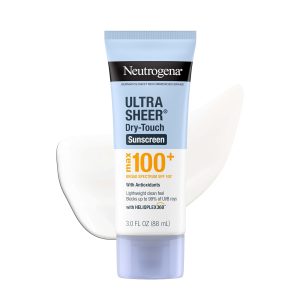
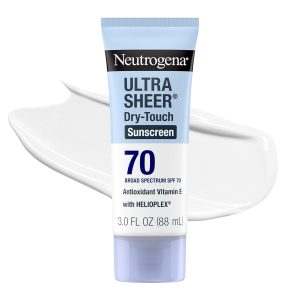
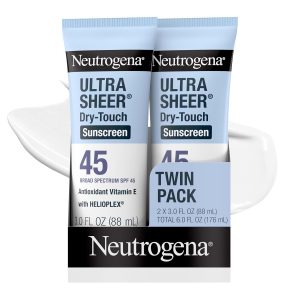
Neutrogena ultra sheer dry touch sunscreen is a lightweight face and body lotion that dries fast and leaves a matte finish, not a greasy one. It comes in SPF 30, 55, and 70, and a nickel-sized amount covers your face and neck. This guide covers how to apply it, the numbers that matter, and when it’s the wrong pick for your skin.
What this product actually is
It’s a chemical sunscreen lotion from Neutrogena, sold for daily use on the face and body. The “dry touch” name describes the finish: it absorbs quickly and feels powdery, not wet, within a minute or two of rubbing it in. That finish is the main reason people choose it over heavier creams.
It’s made for adults who want sun protection they can wear under makeup or on a normal workday, not just at the beach. The one misconception people bring to it’s that “dry touch” means “no reapplication needed.” It doesn’t. The finish is about feel, not staying power — you still reapply on the same schedule as any other sunscreen.
The active ingredients are chemical filters, which work by absorbing UV rays and converting them to heat before they reach your skin. That’s why it rubs in clear instead of leaving a white cast the way mineral zinc or titanium formulas often do.
How to apply it step by step
- Shake the bottle for about 5 seconds. The formula separates, and shaking gives you an even dose of filters in every squeeze.
- Squeeze a nickel-sized amount — roughly half a teaspoon — into your palm for your face and neck. For your full body, use about 1 ounce, which is a full shot glass.
- Dot it on your forehead, both cheeks, nose, chin, and neck before rubbing. This stops you from missing spots like the ears and hairline.
- Rub it in with your fingertips in small circles for 15 to 20 seconds, until you can’t see any white streaks.
- Apply 15 minutes before going outside so the product is fully on your skin before sun exposure.
- Reapply every 2 hours while you’re outside, and right after swimming, sweating heavily, or toweling off.
The one judgement call that decides whether this works: most people apply about half the amount the label testing uses, and that cuts the real protection well below the number on the bottle. If you’re not sure you’ve used enough, use more. A thin layer feels nicer but protects less.
If you have a history of skin cancer, are on prescription acne medication, or take a drug that makes you sun-sensitive, talk to a dermatologist or pharmacist before relying on any over-the-counter sunscreen — that’s a medical call, not a product choice.
Neutrogena Ultra Sheer Dry Touch sunscreen numbers at a glance
The figures below assume an average adult using the standard amount — a half teaspoon for the face, a full shot glass for the body. If you use less, the real SPF drops, and you should treat the number as lower than what’s printed.
| Situation | What to use | How long | What to watch for |
|---|---|---|---|
| Normal workday, mostly indoors | SPF 30, face only | Reapply every 2 hours if near a window | UV passes through glass |
| Full day outdoors, clear sky | SPF 55 or 70, face and body | Every 2 hours | Sweat and rubbing wear it off |
| Swimming or heavy sweating | SPF 70, water-resistant version | Every 2 hours, or after each swim | “Water-resistant” isn’t waterproof |
| Under makeup | SPF 30, let dry 5 minutes first | Every 2 hours | Foundation can shift it |
| Sensitive or acne-prone skin | Patch test first, then SPF 30 | Every 2 hours | Fragrance and filters can irritate |
| Kids over 6 months | SPF 50+ kids formula instead | Every 2 hours | This product isn’t made for young skin |
What separates a good result from a bad one
The people who get the protection they paid for do three things differently. They apply it before they leave the house, not in the car park. They use the full amount, even though it feels like too much. And they set a phone timer for the 2-hour mark instead of guessing.
Beginners tend to treat sunscreen like moisturizer — a small dab, rubbed in fast, once in the morning. That’s the mistake that costs you: a thin layer of SPF 70 can act like SPF 15 or less, and you won’t feel anything until a burn shows up hours later.
The order they work in
Sunscreen goes on last in your skincare routine, after moisturizer, and before makeup. Wait about 5 minutes for it to set, then apply foundation gently — patting, not rubbing, so you don’t lift the layer you just put down.
What they leave alone
They don’t mix sunscreen into their moisturizer or foundation. Mixing dilutes the filters and gives you an uneven layer, so some patches of skin get far less protection than others. Keep it as its own step.
Common problems and quick fixes
Most complaints about this product trace back to application, not the formula. Here’s what people notice and what to do about it.
| What you notice | What it usually means | What to do first |
|---|---|---|
| White streaks on skin | Not rubbed in fully, or applied over damp skin | Wait for skin to dry, then rub in small circles |
| Pilling or flaking under makeup | Too much product, or rubbing instead of patting | Use less, wait 5 minutes, pat foundation on |
| Stinging eyes | Product migrated from your brow line | Avoid the eyelids, use a stick formula near eyes |
| Breakouts after a few days | Clogged pores from a heavy layer | Switch to a lighter formula or wash at night |
| Burned despite reapplying | Not enough product per application | Use the full half-teaspoon for the face |
The rules that apply
In the US, sunscreens are regulated as over-the-counter drugs by the FDA, and the SPF number on the label is measured in a standard lab test using 2 milligrams of product per square centimeter of skin. That’s the amount the test assumes — and it’s more than most people use in real life.
The American Academy of Dermatology recommends a broad-spectrum sunscreen of SPF 30 or higher, applied to dry skin and reapplied every 2 hours. If you’re treating a skin condition or taking a photosensitizing drug, ask your dermatologist which formula is safe for you.
Keeping it working after you buy it
Store the bottle out of direct sun and away from a hot car — heat breaks down the filters over time. Most sunscreens carry an expiration date on the bottle; if there isn’t one, the FDA says a product is generally good for up to 3 years, but you can check the FDA’s page on drug expiration for the current guidance. A bottle that’s changed color, separated and won’t shake back together, or smells off should go in the bin.
When dry touch is the wrong choice
If your skin is dry or flaky, this matte formula can make it feel tighter — a cream or lotion sunscreen suits you better. If you’re going in the water for hours, pick a clearly labeled water-resistant sport formula instead; dry touch isn’t built for that. And if you have rosacea, eczema, or a fragrance allergy, patch test on your inner arm for 2 days before using it on your face, or ask a dermatologist for a fragrance-free mineral option.
Frequently asked questions
Is Neutrogena Ultra Sheer Dry Touch good for acne-prone skin?
It’s oil-free and non-comedogenic, so many acne-prone users tolerate it. But “non-comedogenic” isn’t a guarantee for every person — patch test for 2 days, and wash it off at night with a gentle cleanser.
How long does one bottle last?
A 3-ounce face-and-body bottle lasts about 2 to 3 weeks if you apply the full amount daily to your face and body. Used on the face only, at a half teaspoon a day, expect 2 to 3 months.
Can I use it on my face every day?
Yes. Daily use is exactly what it’s made for, and dermatologists recommend sunscreen every day, not just at the beach. Just cleanse it off at night so it doesn’t sit in your pores.
Is it safe for kids?
For kids over 6 months, use a sunscreen made for children and follow its label.
What happens if I don’t reapply every 2 hours?
Protection drops steadily after that window, especially with sweat or sun exposure. You won’t feel it happening — the burn shows up later. Set a timer and reapply.
Does it protect against both UVA and UVB?
Yes, it’s labeled broad-spectrum, which in the US means it passed the FDA’s test for UVA protection relative to UVB. Broad-spectrum matters because UVA causes aging and skin cancer without burning you first.
Can I wear it under makeup?
Yes, and it’s one of the better formulas for that because it dries matte. Apply it first, wait about 5 minutes, then pat your foundation on gently so you don’t disturb the layer.
Conclusion
A sunscreen is only as good as the amount you use and how often you reapply it. Get those two habits right, and this formula does its job well for most skin types — the matte finish is a bonus, not the point.