
CeraVe Hydrating Mineral Sunscreen: SPF 30 Review and Guide
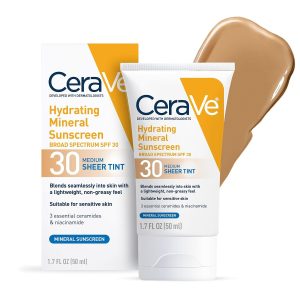
CeraVe’s hydrating mineral sunscreen is a 100% mineral (zinc oxide and titanium dioxide) face sunscreen with a moisturizing base of ceramides and hyaluronic acid. It gives broad-spectrum SPF 30 protection, and it’s made for people whose skin gets dry, tight or flaky from other sunscreens. It usually leaves a light white cast on medium and deep skin tones, which is its biggest complaint.
What to Look for in a CeraVe Hydrating Mineral Sunscreen
The active ingredients are zinc oxide and titanium dioxide, so it works by sitting on top of your skin and bouncing UV rays away. That’s different from chemical sunscreens, which soak in and absorb UV. Mineral filters are the reason dermatologists often point people with sensitive or reactive skin toward this type of product.
The moisturizing part comes from ceramides, hyaluronic acid and glycerin. These are the same skin-barrier ingredients in CeraVe’s regular face creams, which is why the texture feels like lotion rather than the chalky paste many mineral sunscreens have. It’s fragrance-free and labeled non-comedogenic.
It suits you if your skin is dry or sensitive, or if chemical sunscreens sting your eyes and cheeks. It’s not for you if you want zero cast on deep skin, or if you need a sunscreen for swimming and heavy sweating — this one isn’t water-resistant.
How to Use It So It Doesn’t Pill or Look Chalky
- Apply it as the last step of your morning routine. Moisturizer first, then this sunscreen, then makeup. Putting it under a thick cream makes it ball up.
- Use two finger-lengths for your face and neck. That’s a common rule of thumb for getting close to the amount used in SPF testing, and most people apply far less than that.
- Dot it on, then press and spread. Rubbing hard drags the white pigment into fine lines and makes streaks.
- Wait 2 to 3 minutes before makeup. The white cast can look a little less noticeable once the formula dries down on your skin.
- Reapply every 2 hours outdoors. Indoors near a window, once in the morning is usually enough for most people.
Tip: On deeper skin tones, a tinted mineral formula is the more reliable way to cut the cast; mixing moisturizer into sunscreen dilutes it and can lower the protection you actually get.
How It Compares to Other CeraVe Sunscreens
If your skin is oily but your eyes sting, you’re between two rows. The ultra-light is the one that disappears, and the tinted mineral is the one that won’t sting. Most people who react to chemical filters find the sting comes from the eyes, not the face, so a tinted mineral on the face and a chemical formula kept off the brow bone is a workable split.
The tinted version isn’t a deeper sunscreen. It’s the same zinc and titanium base with iron oxides, which is why it flatters medium and deep skin without turning gray. If you sit at the lighter end of medium, the untinted may still read ashy on you; the tinted is the better buy.
Shade range is the real limit. If none of the tints match, go untinted and accept the cast, or use the ultra-light and keep it away from your eyes.
Mistakes That Cost You Protection
The most common one is using too little. A pea-sized amount for the whole face gives you a fraction of the SPF on the label, so you get far less protection than you think. Measure two finger-lengths and you’ll be close to the tested amount.
Two finger-lengths means squeezing a line along the length of your index and middle fingers. It’s roughly a quarter teaspoon for the face and neck, which approximates the 2 mg per square centimeter dose used in SPF testing. Most people apply a quarter of that.
The second mistake is skipping reapplication because the product feels like a moisturizer. Feeling moisturized isn’t the same as being protected — sweat, oil and touching your face wear the sunscreen film away through the day.
Every two hours is the standard, and sooner if you’re swimming or sweating heavily. If you’re indoors away from windows all day, once in the morning is enough.
A third: storing it in a hot car. Heat can change the texture and make it separate. Keep it somewhere room temperature, and check the expiration date on the tube.
When to See a Dermatologist
Sunscreen handles everyday UV, but it isn’t a treatment. If you have a mole that’s changing shape or color, a sore that won’t heal, or a reaction like swelling and blistering after sun exposure, see a board-certified dermatologist rather than switching products.
A changing mole is the one to take most seriously. Melanoma is far easier to treat when it’s caught early, and the difference between a spot your doctor can remove in the office and one that needs wider treatment often comes down to how long you waited. Book the appointment; don’t watch it for another summer.
People with a history of skin cancer, or those taking medicines that make skin extra sun-sensitive, need a plan built around their own situation. The FDA sunscreen safety and effectiveness rules explain what SPF and broad-spectrum claims actually mean on a label, which helps you read any bottle correctly.
For general sun protection guidance, the CDC’s sun safety recommendations cover shade, clothing and timing alongside sunscreen.
Frequently Asked Questions
Is CeraVe hydrating mineral sunscreen safe for acne-prone skin?
Yes, it’s labeled non-comedogenic and fragrance-free, so it’s unlikely to clog pores for most people. That said, any thick cream can feel heavy on active breakouts. If yours flares, switch to a lighter gel-based sunscreen and keep using your acne treatment.
Can I use it on my body, not just my face?
You can, but it’s an expensive way to cover your arms and legs. The tube is small and the formula is rich, so most people save it for the face and neck and use a cheaper body sunscreen elsewhere. Just make sure the body product is also broad-spectrum.
Does it work under makeup?
Yes, if you let it set for a few minutes first. Applying foundation straight away is what causes pilling and patchiness. Press the makeup on gently with a sponge rather than rubbing, and avoid heavy cream foundations on top.
Conclusion
Start with the untinted version and give it a week of morning use to see how your skin reacts. If the white cast bothers you, move to the tinted formula rather than piling on other products to hide it. And if your skin still stings or flakes, that’s a sign to ask a dermatologist which filter type fits your skin.